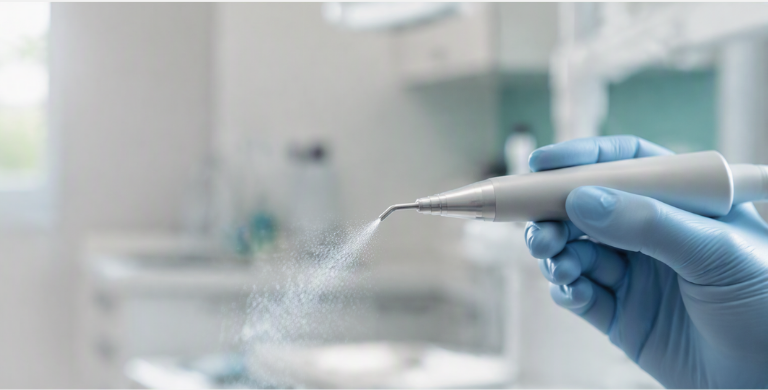
What is air polishing?
Air polishing is a professional cleaning method that uses a controlled jet of air, warm water and an ultra-fine powder to lift plaque, biofilm and surface stains off your teeth. Instead of scraping deposits away, the spray gently washes them off, including from the grooves, gum margins and spaces between teeth that are difficult to reach with hand instruments.
The powder used is far finer and less abrasive than traditional polishing paste. Erythritol-based powders, for example, have a particle size of around 14 microns and are gentle enough to be used both above and below the gumline.
Biofilm: the reason air polishing exists
Biofilm is the soft, sticky layer of bacteria that forms on your teeth every single day. You cannot always see it, but it is the starting point for cavities, gum disease and bad breath. Because it is invisible, patches of it are easily missed during a routine clean.
Air polishing is usually part of a wider approach known as Guided Biofilm Therapy, where a harmless disclosing dye is applied first to stain the biofilm a visible colour. You and your oral hygienist can then see exactly where the build-up is, the spray removes it, and only afterwards are any remaining hardened deposits (tartar) dealt with using an ultrasonic scaler.
That order matters. Traditionally, hygienists scaled first and polished last. Removing the soft biofilm first means there is simply less scaling left to do, which makes the appointment quicker and more comfortable.
What are the benefits?
- More comfortable. Less scraping and less pressure on sensitive teeth and gums.
- More thorough. The dye removes the guesswork, so nothing is cleaned by feel alone.
- Gentler on enamel. Low-abrasion powders are kinder to tooth surfaces than conventional polishing pastes.
- Reaches difficult areas. Deep grooves, crowded teeth, orthodontic brackets and implant surfaces are all easier to clean with a spray than with an instrument.
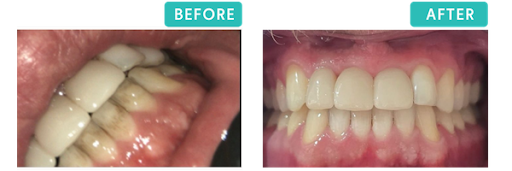
- Visible stain removal. Tea, coffee, red wine and tobacco stains lift away, leaving teeth looking brighter without whitening treatment.
- You leave knowing more. Seeing your own plaque pattern makes it far easier to understand where your brushing is missing.
Who is it suitable for?
Air polishing suits most patients, and it is particularly helpful if you are anxious about dental visits, have sensitive teeth, wear braces or aligners, have implants, or struggle with recurring stains. Your oral hygienist will check your medical history first, as some powders are not suitable for everyone, and will adjust the powder and technique to your needs.
It does not replace your check-up or your daily routine. Brushing twice a day, cleaning between your teeth and keeping to your recommended recall interval are still what protect your teeth long term.
What to expect during your appointment
A typical visit takes around 30 to 60 minutes. Your hygienist will:
- Examine your teeth and gums.
- Apply the disclosing dye and talk you through what it reveals.
- Clean with the air polisher.
- Follow up with an ultrasonic scaler where needed.
- Check the result and agree on when you should come back.
Most patients describe the sensation as a cool, slightly salty spray rather than anything sharp. There is usually no lingering sensitivity afterwards, and you can eat and drink normally, although it is worth avoiding strongly staining foods for a few hours while the surface of your teeth is freshly cleaned.
Book your oral hygiene appointment
If it’s been a while since your last clean, or if past visits are the reason you keep putting it off, air polishing is worth a try. Most patients are surprised by how easy it feels. Air polishing is now offered by Miss Kathryn Talken at Intercare George Medical and Dental Centre – book now.