When a loved one has a stroke, the days in acute hospital care can feel overwhelming. Then comes a question that many families are not prepared for: what happens next?
Leaving the acute hospital is not the end of the medical journey, for most stroke survivors, it is the beginning of a longer process of recovery. Understanding what rehabilitation involves, what to expect, and how to access the right level of care can make a significant difference to the outcome.
This article explains the stroke recovery journey, what neurological rehabilitation involves, and how families can support their loved one through each stage.
What Is a Stroke and What Does It Affect?
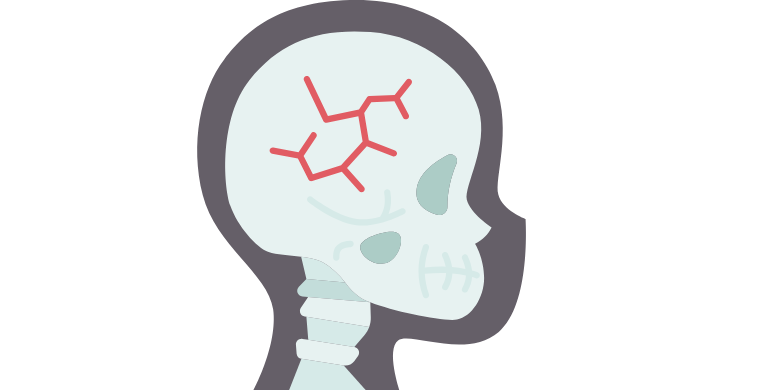
A stroke occurs when the blood supply to part of the brain is interrupted, either by a blocked artery (ischaemic stroke) or a burst blood vessel (haemorrhagic stroke). Within minutes, brain cells begin to die, and the functions controlled by the affected area of the brain are disrupted.
Depending on which part of the brain is affected and the severity of the stroke, survivors may experience:
- Weakness or paralysis on one side of the body
- Difficulty with speech, language, or understanding
- Problems swallowing
- Memory, attention, or problem-solving difficulties
- Changes in vision or perception
- Fatigue, emotional changes, and depression
No two strokes are the same, and no two recovery journeys are identical. What is consistent, however, is that structured rehabilitation significantly improves outcomes for most survivors.
The Brain’s Ability to Recover: Understanding Neuroplasticity
One of the most important concepts in stroke recovery is neuroplasticity, the brain’s ability to reorganise itself by forming new neural connections. When one area of the brain is damaged, other areas can, over time, take over some of its functions.
This is why rehabilitation works. Repetitive, structured therapy stimulates neuroplasticity, helping the brain relearn skills that were disrupted by the stroke. The earlier rehabilitation begins, often within 24 to 48 hours of stabilisation, and the more intensive and consistent it is, the greater the potential for recovery.
Recovery does not happen on a fixed timeline. While the greatest gains are typically made in the first few months, meaningful improvement can continue for years with the right support.
The Phases of Stroke Recovery
Acute Phase: The First Days in Hospital
Immediately following a stroke, the priority is stabilisation and preventing further brain damage. This takes place in an acute hospital setting where the medical team manages the underlying cause, monitors neurological status, and begins early mobilisation where appropriate.
During this phase, the treating team will begin to assess the patient’s rehabilitation needs and, where appropriate, arrange referral to a specialised rehabilitation programme.
Subacute Phase: Specialised Rehabilitation
Once the patient is medically stable, transfer to a specialised physical rehabilitation hospital allows for intensive, structured therapy. This is the phase where the greatest functional gains are typically made.
In a specialised rehabilitation setting, patients receive therapy from an interdisciplinary team working toward shared, patient-centred goals. Sessions are structured, progressive, and tailored to each individual’s deficits and recovery potential.
This phase may last from a few weeks to several months, depending on the severity of the stroke and the patient’s progress.
Community and Long-Term Phase
After discharge from a rehabilitation hospital, many patients continue with outpatient therapy and community-based support. Families play a central role in this phase, supporting daily practice, managing medication, attending follow-up appointments, and monitoring for warning signs.
What Neurological Rehabilitation Involves
A structured stroke rehabilitation programme typically addresses the following areas:
Functional Mobility
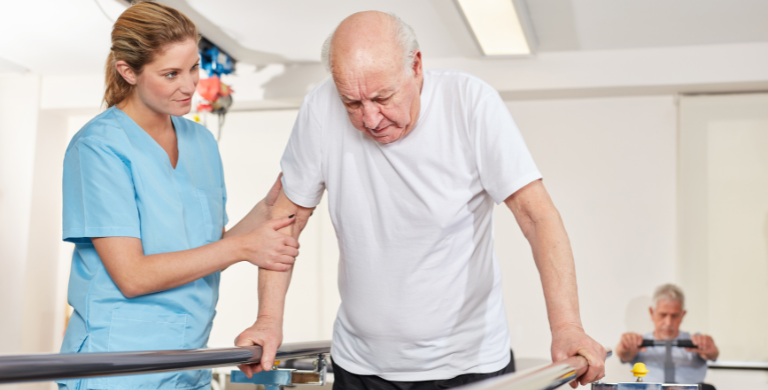
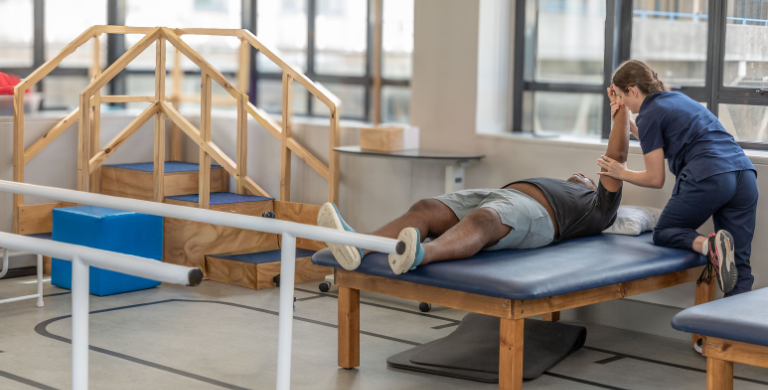
Physiotherapists work on rebuilding strength, balance, and coordination. Goals progress from basic bed mobility and transfers through to walking, stair climbing, and functional independence in movement.
Speech and Communication
Speech and language therapists address aphasia (difficulty with words and language), dysarthria (speech that is slurred or difficult to produce), and reading or writing impairments. Therapy may also involve the use of communication aids where necessary.
Swallowing
Difficulty swallowing (dysphagia) is common after stroke and carries the risk of aspiration pneumonia. Speech and language therapists assess swallowing function and provide targeted intervention to support safe eating and drinking.
Cognition and Perception
Occupational therapists and neuropsychologists address cognitive difficulties including memory, attention, spatial awareness, and executive function. Retraining focuses on helping patients manage daily tasks safely and independently.
Daily Living Skills
Occupational therapists work with patients to rebuild independence in activities of daily living such as dressing, grooming, cooking, and home management. They also assess the home environment and recommend modifications or assistive devices to support a safe return home.
How Families Can Support Stroke Recovery
Family involvement is one of the strongest predictors of successful recovery after stroke. Here is how you can help:
- Be present and engaged: Regular visits and emotional support have a measurable impact on motivation and mood during rehabilitation.
- Learn from the therapy team: Ask the physiotherapist, occupational therapist, and speech therapist how you can reinforce exercises and strategies at home during visits.
- Prepare the home environment: Work with the occupational therapist before discharge to identify any modifications needed, grab rails, ramp access, furniture rearrangement, to ensure a safe return.
- Support emotional recovery: Depression and anxiety are common after stroke. Encourage open conversation, seek psychological support if needed, and watch for signs of low mood or withdrawal.
- Pace the recovery: Stroke recovery is not linear. There will be good days and difficult days. Celebrate progress without placing pressure on a fixed timeline.
- Know the warning signs: Learn to recognise signs of a recurrent stroke (sudden weakness, speech difficulty, vision changes, severe headache) and act immediately if they occur.
When Should Rehabilitation Begin?
The answer, for most patients, is as soon as they are medically stable. Early rehabilitation, ideally within the first 24 to 48 hours of stabilisation, is associated with better functional outcomes, shorter hospital stays, and a reduced risk of complications such as pressure sores, contractures, and deep vein thrombosis.
If your loved one has been hospitalised following a stroke and you have not yet had a conversation with the treating team about rehabilitation planning, ask about it. A referral to a specialised rehabilitation hospital can be made by the treating neurologist, physician, or GP.
Finding the Right Stroke Rehabilitation Programme
Intercare Physical Rehabilitation Hospitals offer stroke rehabilitation. Stroke rehabilitation is a tailored, interdisciplinary program designed to help stroke survivors regain independence and improve function. It focuses on relearning daily skills, improving mobility, and strengthening cognitive abilities through repetitive exercises, often beginning 24–48 hours after stabilisation.
Request Information or Patient Assessment
Find a hospital near you and enquire today.
Why refer to Intercare
Partner with a hospital offering expert interdisciplinary acute and sub-acute rehabilitation. Specialists benefit from easy referrals, dedicated case managers, full administrative support, and proven outcomes across complex neurological, orthopaedic, cardiac, and post-critical care cases. Fully accredited and Department of Health registered.